Realistic Ragdoll Engine Loot Guide
If you are searching for Realistic Ragdoll Engine loot, treat it as an exploration task rather than a confirmed checklist. Move out from the main physics-testing area, follow reachable routes into other spaces, and test suspected collectibles one at a time. The available footage confirms a player looking for “the rest of the loot” and attempting a first, second, and third target, but it does not name the items or prove that three is the total.
Start the loot search
Use this route when you want to look for collectibles without confusing ordinary physics objects with loot:
- Begin in the area where you are already testing ragdolls, tools, or hazards.
- Look for a route into another part of the map instead of staying inside the initial test space.
- Move downward or into the next reachable area when the environment allows it.
- Scan the path and nearby spaces for a target that appears collectible.
- Try the pickup, then record whether the target disappears, produces a visible result, or remains unchanged.
The evidence supports moving into another area and moving down before the player attempts the reported targets. It does not provide a named room, coordinate, exact control, or guaranteed route, so use the live layout as the authority for navigation.
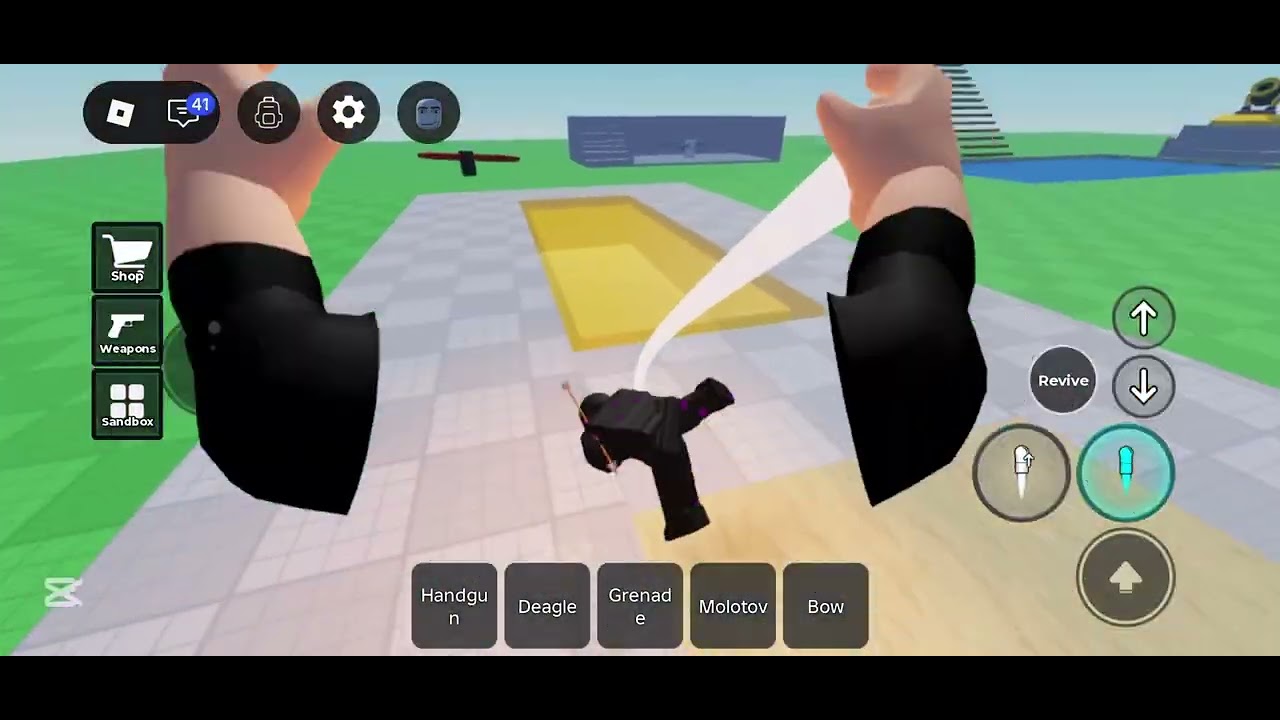
Explore another area and attempt loot targets
This moment supports the route into another area and the attempts to reach the first, second, and third loot targets described in this section.
Track the first, second, and third targets
The footage is useful for organizing a search, but not for turning an observation into a full loot list:
| Search checkpoint | What the evidence supports | What remains unknown |
|---|---|---|
| Remaining loot | The player is looking for additional loot beyond what was already found or expected | The number already collected and the complete total |
| First target | The player attempts to get a first suspected loot target | Its name, appearance, and pickup result |
| Second target | The player attempts to get a second suspected loot target | Whether it is a separate collectible or the same target revisited |
| Third target | The player attempts to get a third suspected loot target | Whether more targets exist afterward |
Use these as notes for your own search, not as item names. If a target does not respond, mark it as unconfirmed and continue exploring rather than assuming the route or pickup requirement.
Handle an uncertain pickup
When a suspected collectible does not clearly register, isolate the problem before changing the whole route:
- Stop near the target and try the interaction again from a slightly different position.
- Check whether your character is actually in the target area rather than looking at it from a distance.
- Move around the object or approach it from another side if the environment permits.
- Note any visible change, sound, disappearance, or counter update.
- If nothing confirms the pickup, leave the target unresolved and search the next reachable area.
This process avoids claiming that a target was collected when the supplied evidence only shows an attempt. The local materials do not document a universal pickup control, a required tool, an interaction range, or a retry limit.
Search around obstacles safely
Loot exploration can overlap with the game's obstacle and physics spaces. The obstacle guide covers the hazard-aware route in more detail. A route may lead downward or through an area where collisions affect movement, so keep the search separate from experiments when you need a clear result:
- Move slowly through unfamiliar sections so a collision does not make you skip a target.
- If a ragdoll, weapon, or other physics object blocks the view, reposition it before deciding that loot is absent.
- Test one suspected collectible at a time and note its location relative to a recognizable part of the environment.
- Do not label every movable object as loot; the evidence does not define the appearance of the collectibles.
- Revisit an unresolved spot after checking the next area, but do not count a revisit as a new item.
The evidence does not establish that loot changes damage, physics behavior, progression, or access to a specific area. Those relationships should be treated as unverified until the live game displays a result.
What the current evidence does not confirm
There is no reliable local list of loot names, exact locations, total count, respawn behavior, rewards, completion counter, or achievement tied to collecting it. The phrase “the rest of the loot” indicates that multiple targets may exist, while the separate first, second, and third attempts show how the search unfolded in one piece of footage. Neither observation proves a complete route or final total.
For a dependable checklist, record each target only after the game visibly confirms the pickup. Keep the result tied to the area where you found it, and recheck the live experience after updates because collection behavior can change.